
This is to show what it’s like to have a kitchen floor upgraded from tile to luxury vinyl. Similar results can occur if changing from or to any other materials as well. Your results may differ but this does include showing order delays, how issues were resolved, as well as the final results. Finally, I am certified in Project Management so, I’ll include added information such as a log of events & suggestions that might help you in your project considerations.
Common Types of Flooring
- Ceramic Tile: Affordable, durable porcelain or clay tiles that resist water and stains; ideal for high-traffic kitchens with easy cleaning. Subcategories include glazed, unglazed, subway, mosaic, and patterned tiles.
- Porcelain Tile: Denser and harder than ceramic, highly water-resistant and scratch-proof; mimics stone or wood for a premium look. Subcategories include polished, matte, rectified-edge, large-format, and textured porcelain.
- Natural Stone (e.g., Marble, Granite): Luxurious, heat-resistant slabs quarried from stone; requires sealing to prevent stains but ages beautifully. Subcategories include marble, granite, slate, travertine, limestone, and quartzite.
- Luxury Vinyl Plank (LVP): Waterproof, budget-friendly synthetic flooring mimicking wood or stone; soft underfoot with click-lock installation. Subcategories include rigid core (SPC), WPC (wood-plastic composite), flexible planks, and glue-down LVP.
- Linoleum: Made from natural materials like linseed oil; eco-friendly, antimicrobial, and resilient but less water-resistant than vinyl. Subcategories include Marmoleum brand, printed designs, inlaid patterns, and rolled sheets.
- Hardwood: Timeless solid or engineered wood planks; warm and elegant but needs sealing for moisture protection in kitchens. Subcategories include solid hardwood, engineered hardwood, wide-plank, narrow-plank, and hand-scraped finishes.
- Laminate: Photographic layer over composite core imitating wood/stone; cost-effective and durable but not fully waterproof. Subcategories include direct-pressure (DPL), high-pressure (HPL), textured/embossed, and waterproof-core laminates.
- Cork: Soft, renewable bark flooring; cushions feet, insulates, and resists moisture when sealed, with a natural speckled look. Subcategories include glue-down sheets, click-lock planks, floating tiles, and factory-stained or oiled cork.
- Bamboo: Sustainable grass-based hardwood alternative; hard and water-resistant when properly finished, with a light bamboo grain. Subcategories include strand-woven, vertical-grain, horizontal-grain, and carbonized (caramelized) bamboo.
- Sheet Vinyl Flooring: A budget-friendly, waterproof PVC-based material sold in large rolls and installed as a single seamless sheet; common in rentals and low-cost homes for its easy installation, stain resistance, and low upkeep. Subcategories include printed sheet, inlaid designs, embossed textures, and no-wax maintenance types.
Reason for Changing Kitchen Floor
There are often multiple reasons for changing out a kitchen floor. We’ve had floor materials like standard roll out 1-piece vinyl, wood look standard vinyl, & real wood planks. Here are the reasons we changed away from the following materials, as we’ve experienced them in 2 different homes.
- Sheet Vinyl Flooring. Some patterns can be cheap looking. Can be slippery with splashes of water or walking on it with wet shoes while raining outside. Can’t really ever be “repaired” if damaged or stained.
- Tile. Can feel very cold to bare feet or even socked feet. Biggest issue of costly maintenance is the grout becoming easily discolored or stained. Tile can become cracked with dropping a cast iron skillet but it can be replaced (costly) only if you saved extra tiles on original installation project.
- Engineered hardwood planks. Our experience was they weren’t waterproof and were curling up on edges of the planks.
- Hardwood. Must include a water barrier sheet (not all installers include this, but we had it) to help reduce chance of mold over time. Was warm feeling and looked great but the hand-scraped finish made the real wood surface impossible to smoothly pull out chairs. Also, a table and chairs could never have the legs adjusted for leveling due to the natural ridged texture on the wood planks.
This project is to change out from Ceramic Tile over to “luxury vinyl”, which is water-proof (better than water-resistant). Also, our selection will have a hardwood look with a small amount of a wood grain texture so chair and table legs can be adjusted to be level. Finally, we’re adding a sound reduction barrier to help raise the floor to match the previous tile with cement height. Coincidentally, it’s also marketed to help make walking on a wood floor quieter, not that we cared about that aspect. We just needed the height so the pantry door frames don’t have a noticeably large gap at the bottom.
Kitchen Floor BEFORE: Tile
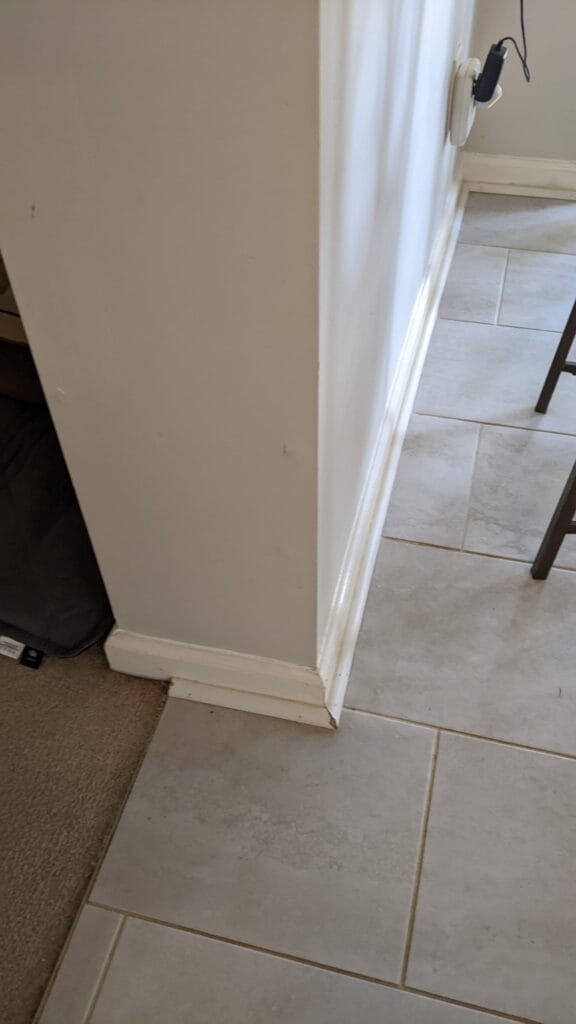
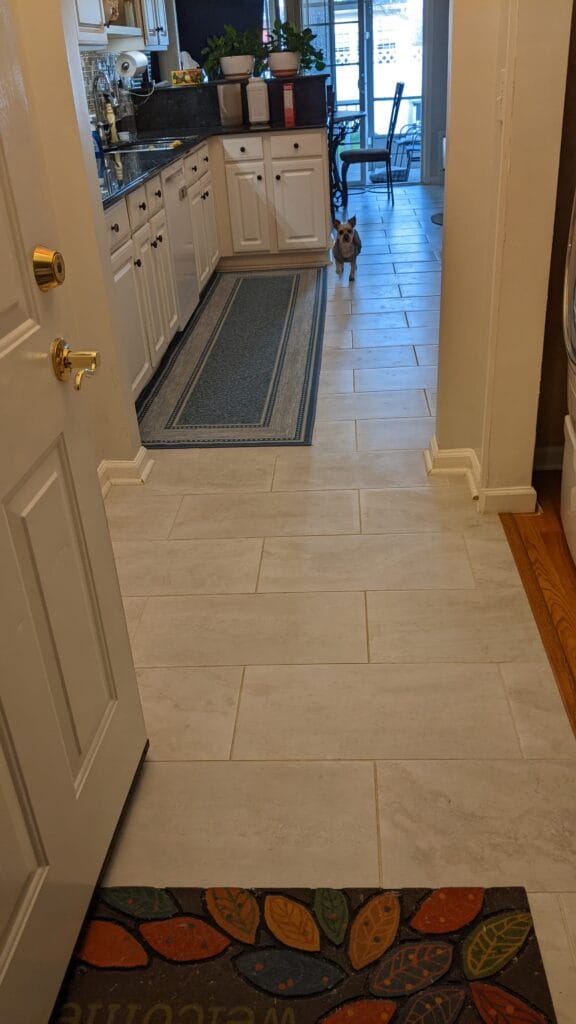
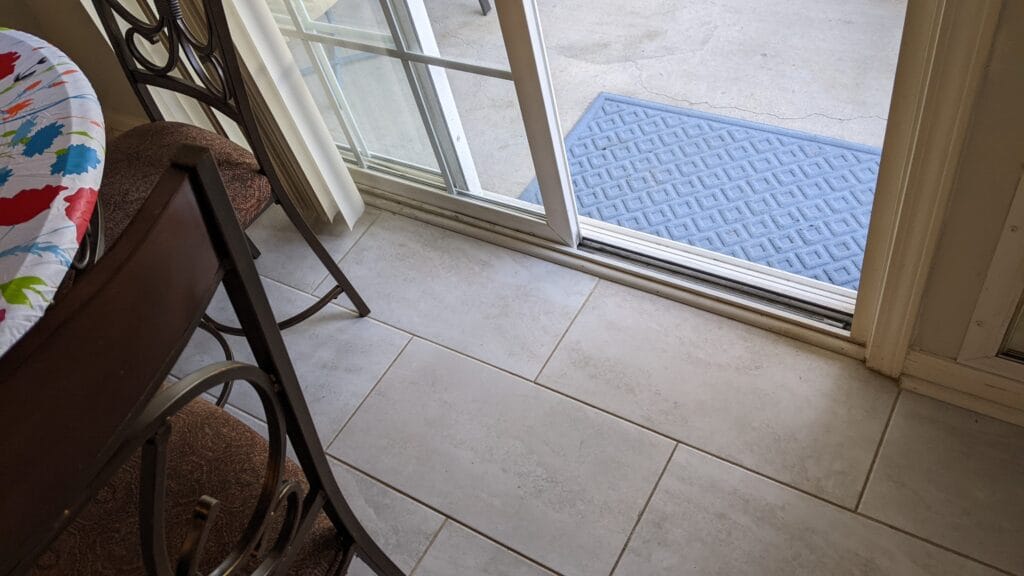
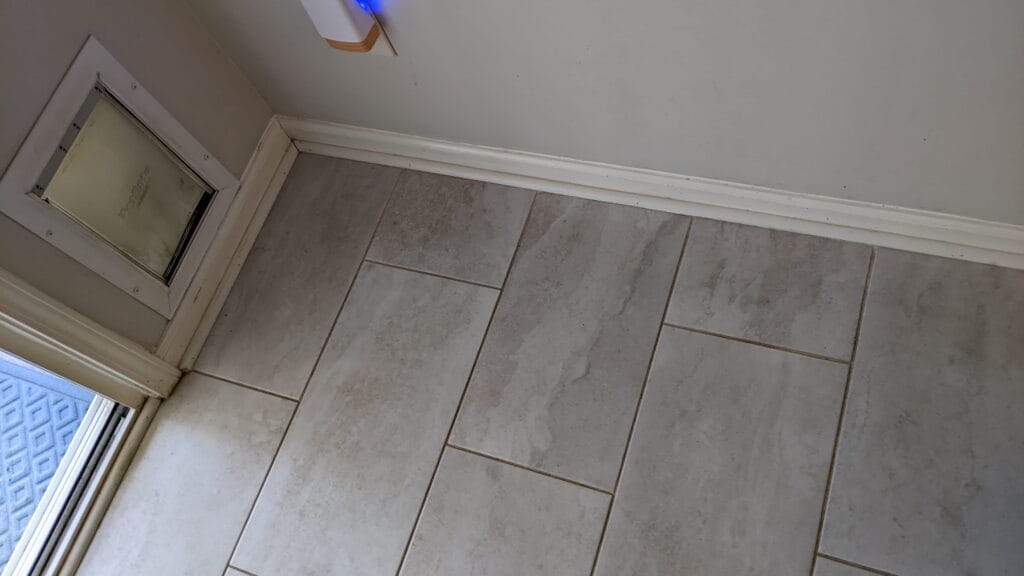
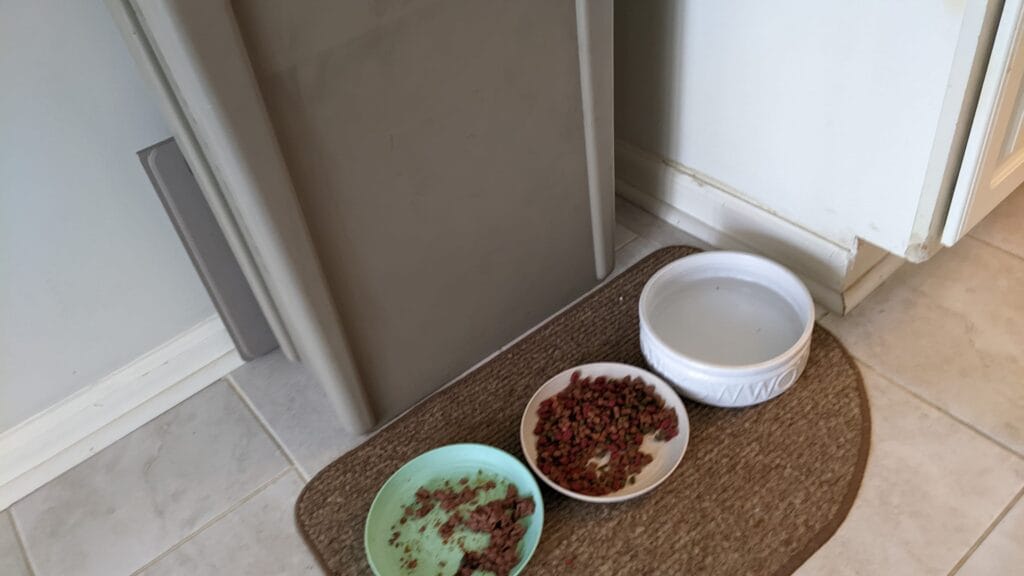
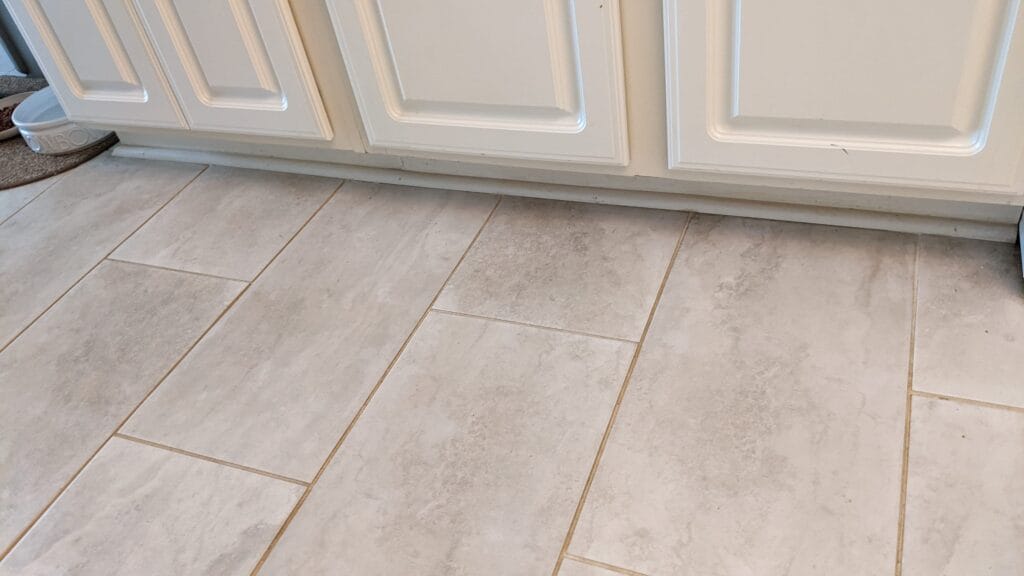
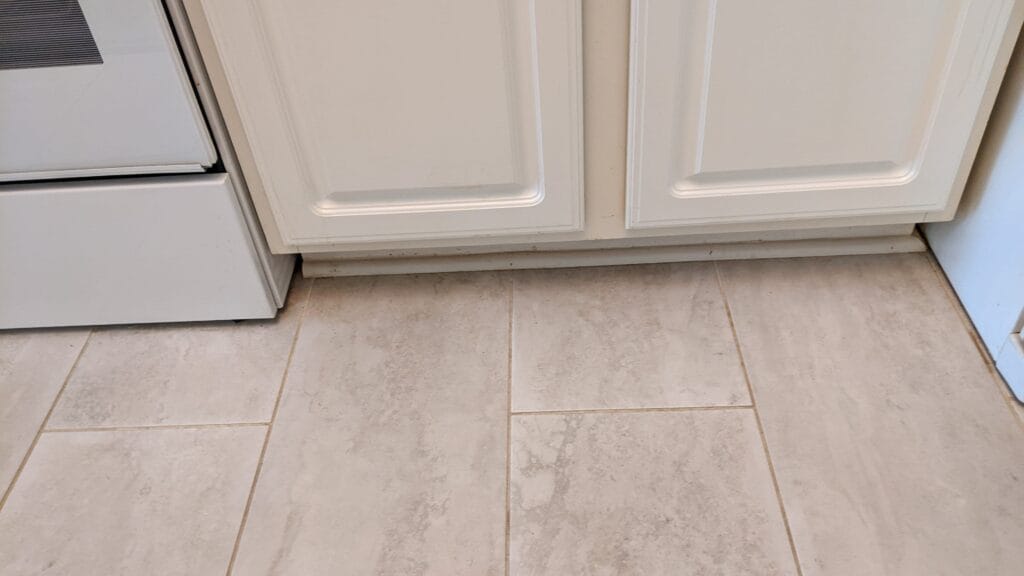
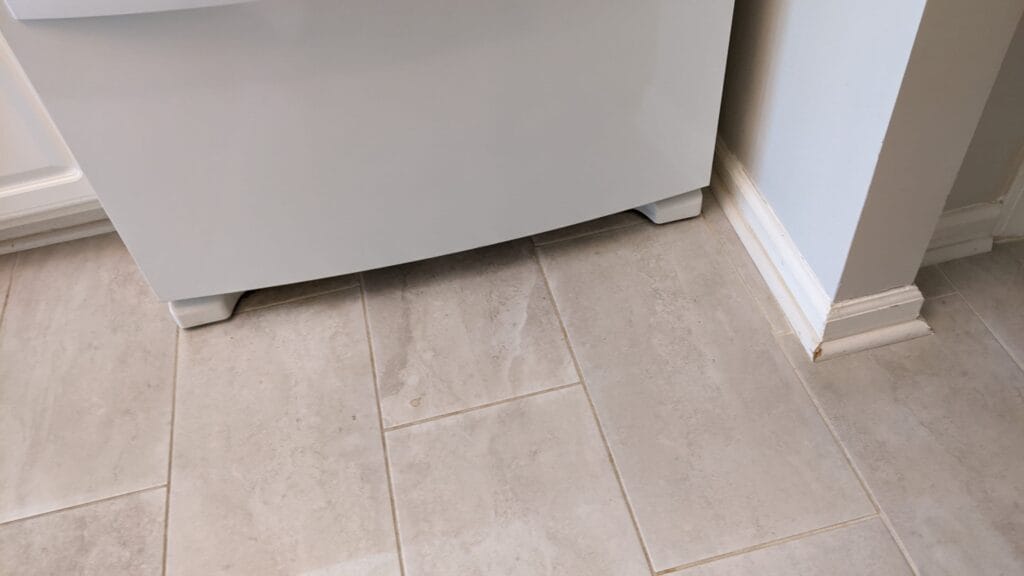
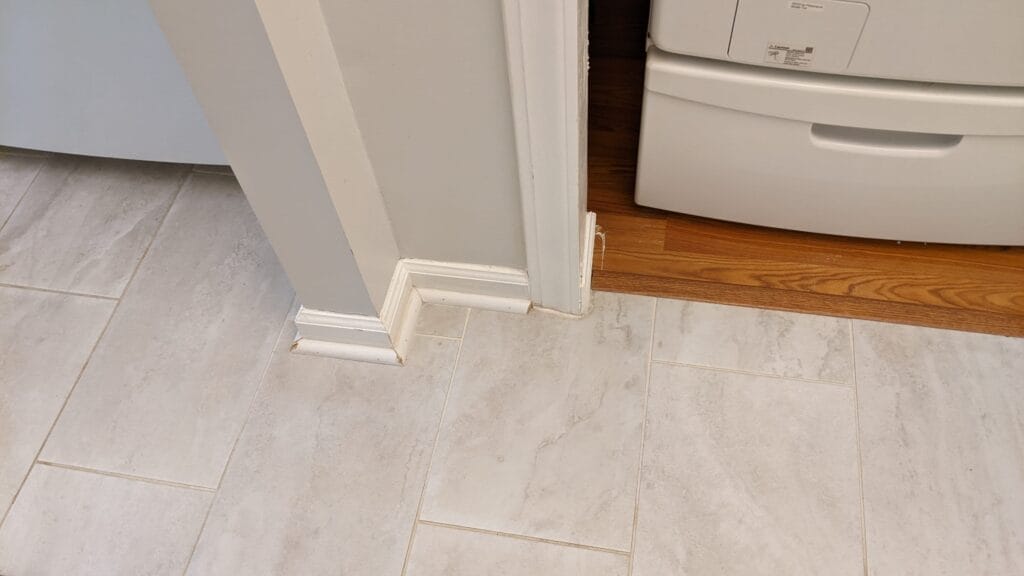
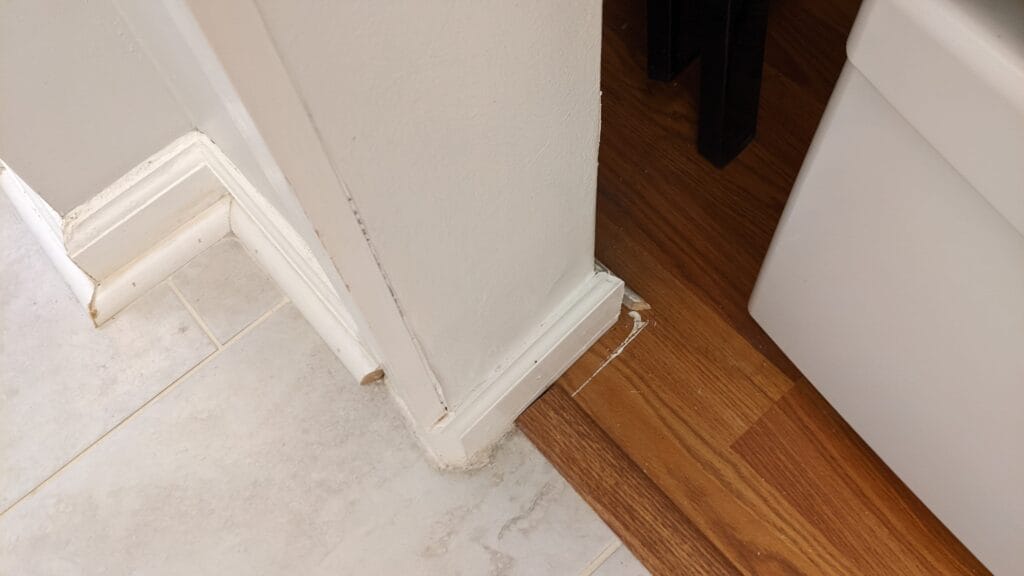
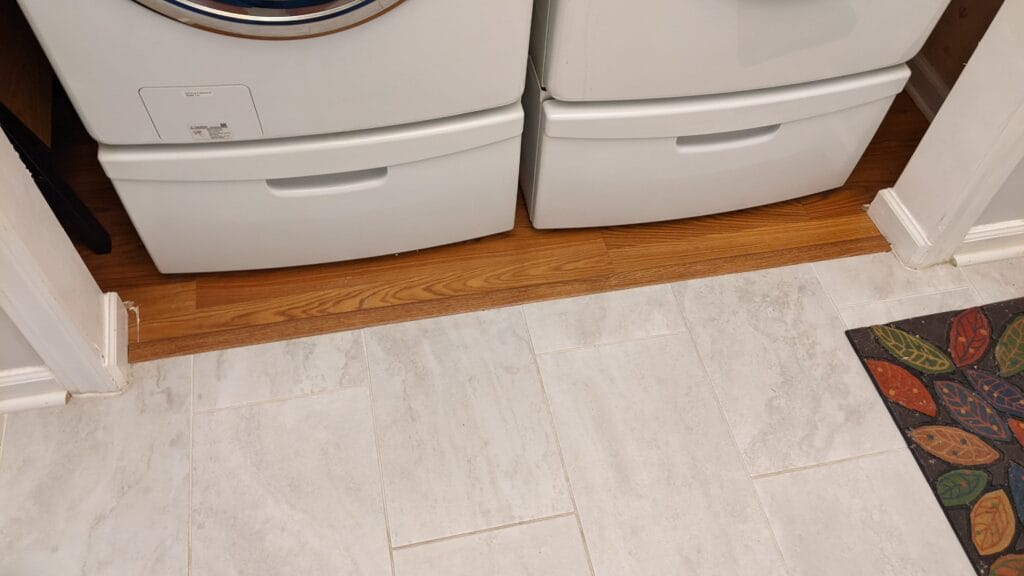
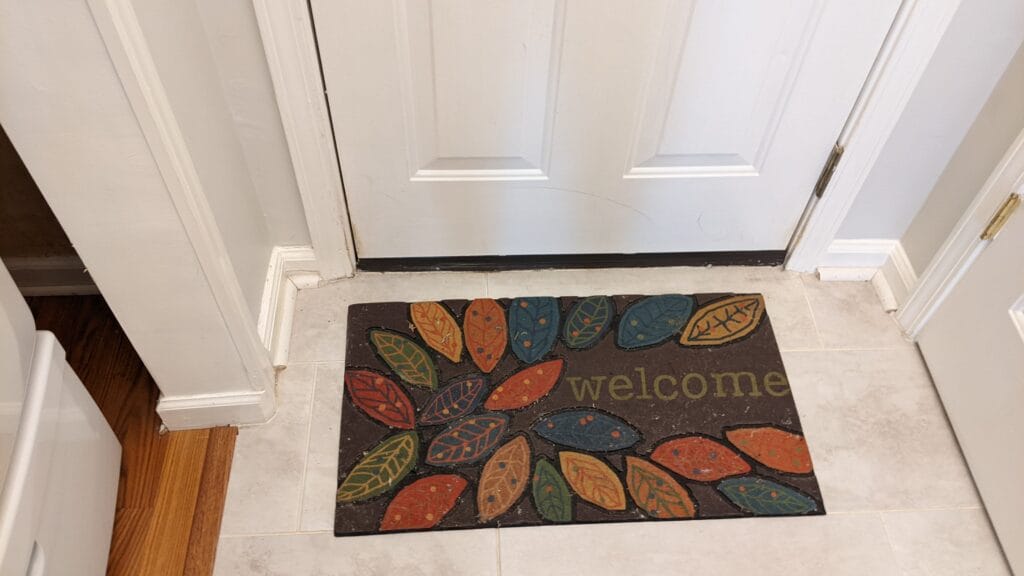
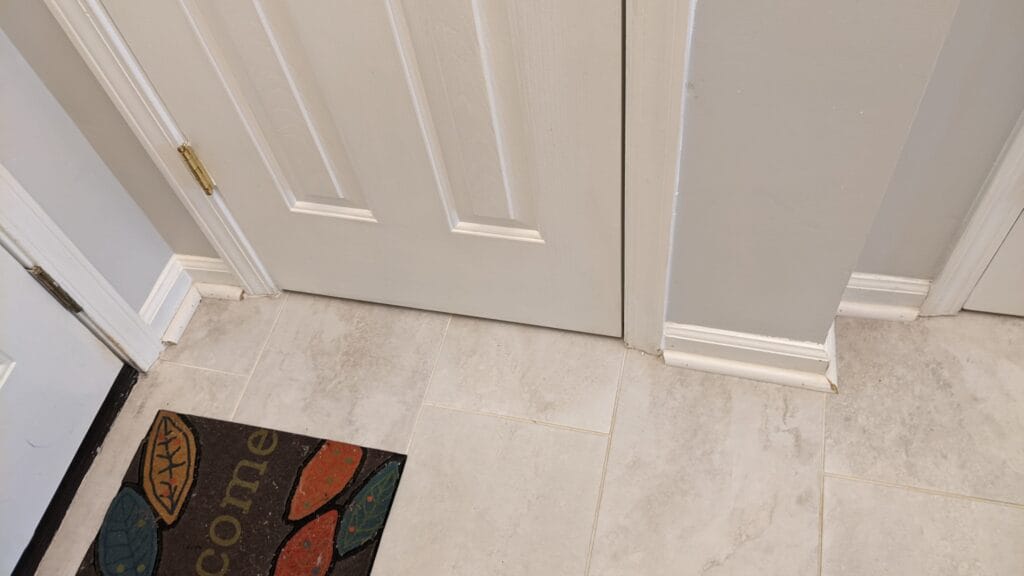
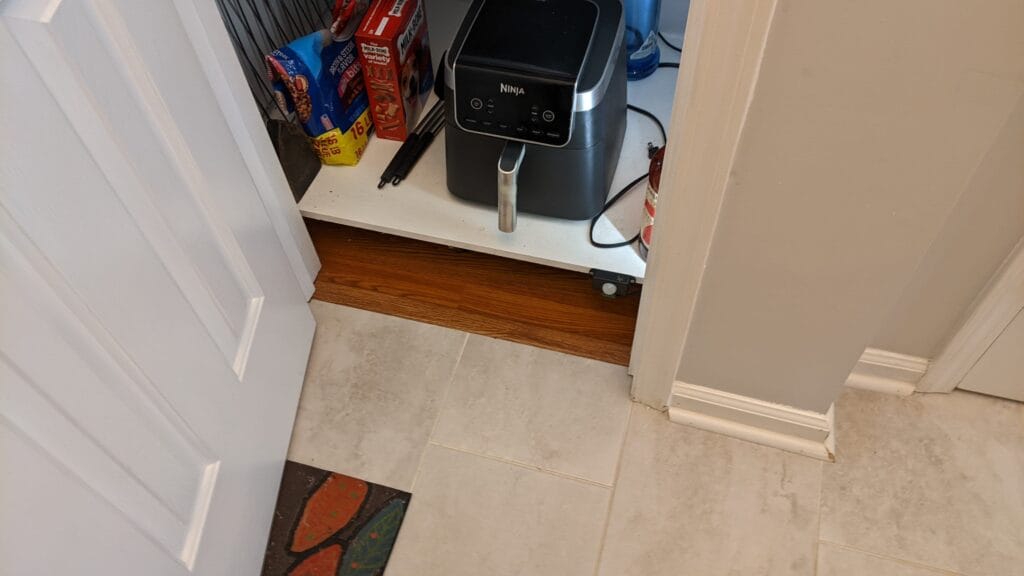
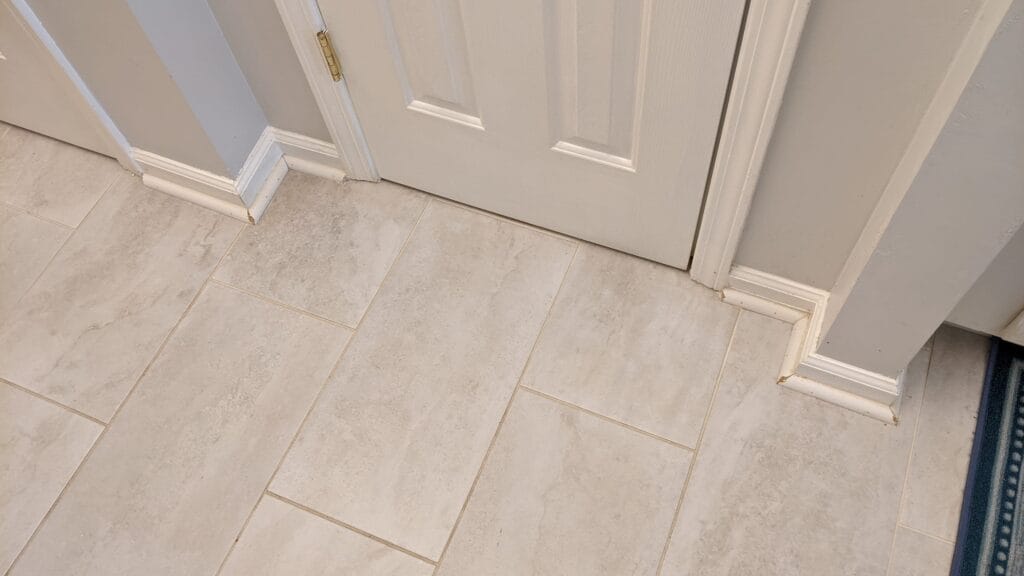
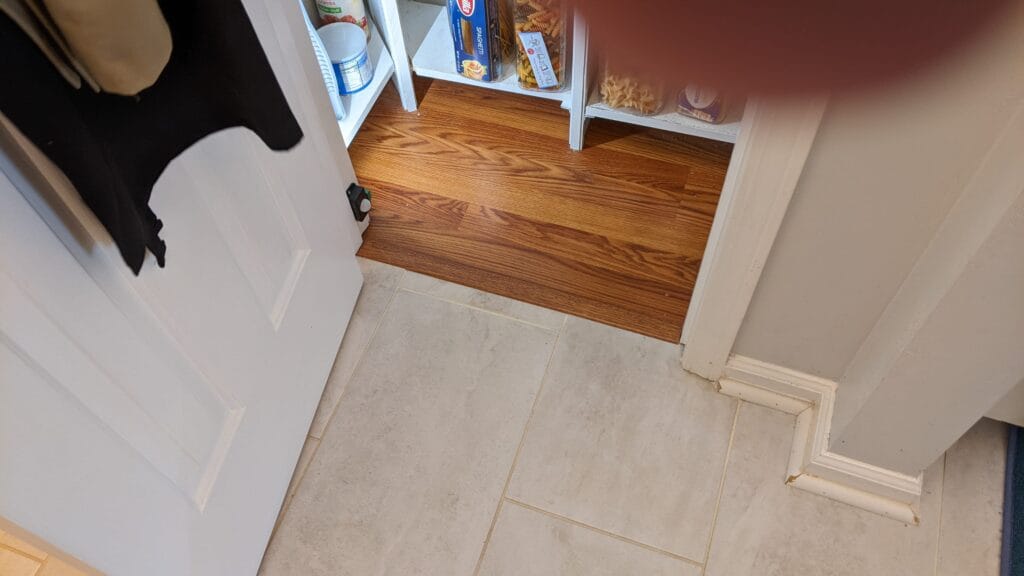
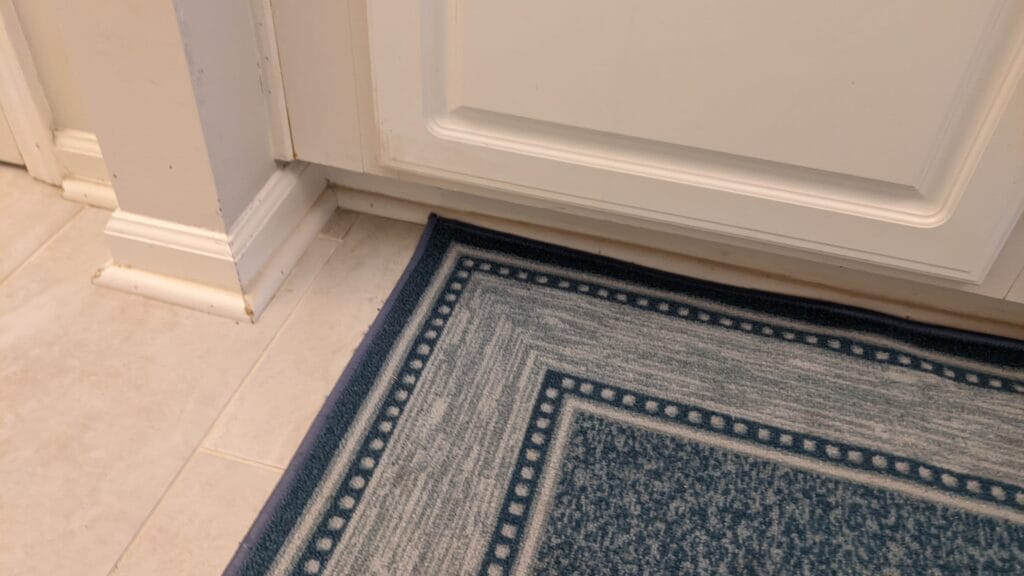
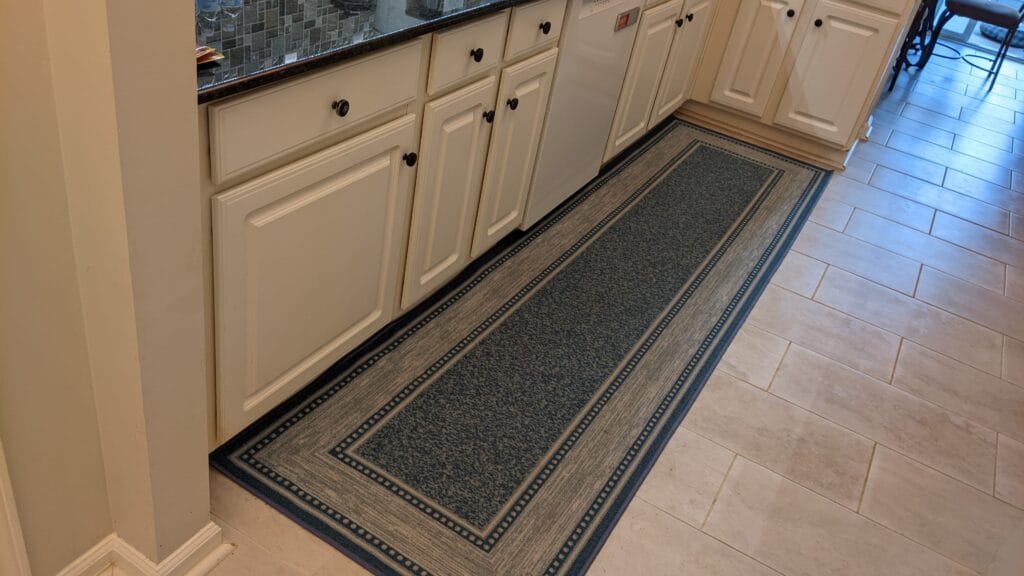
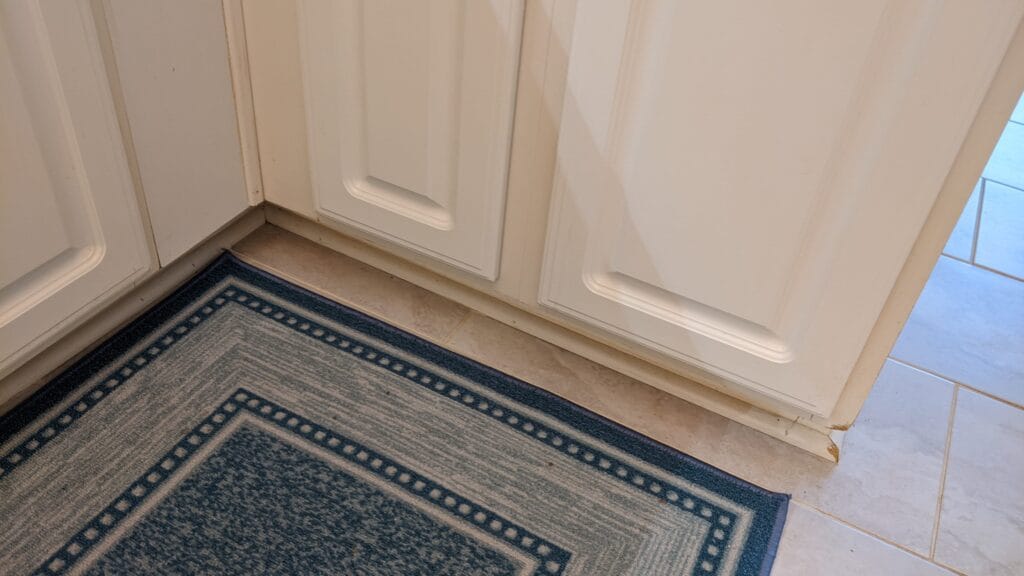
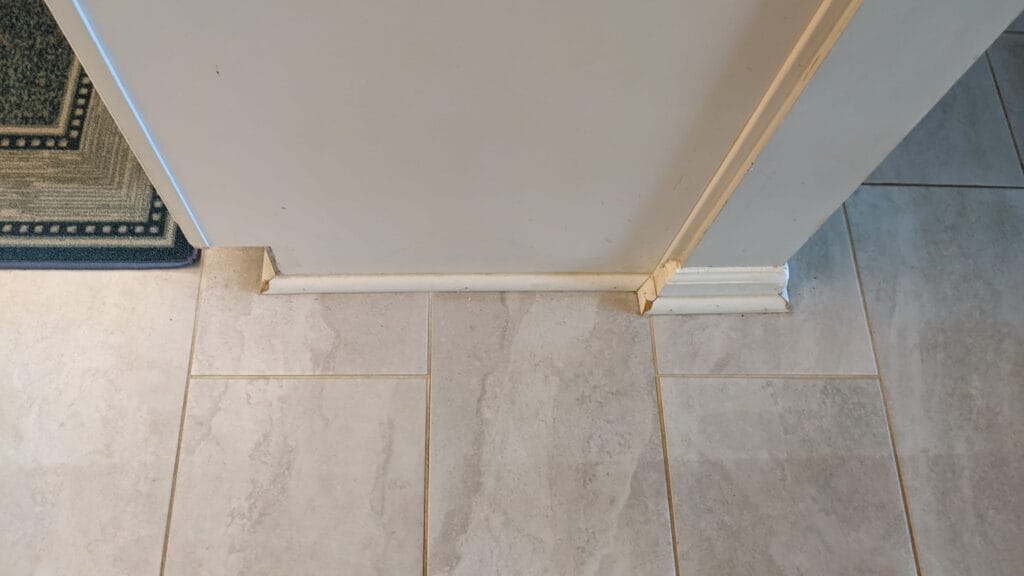
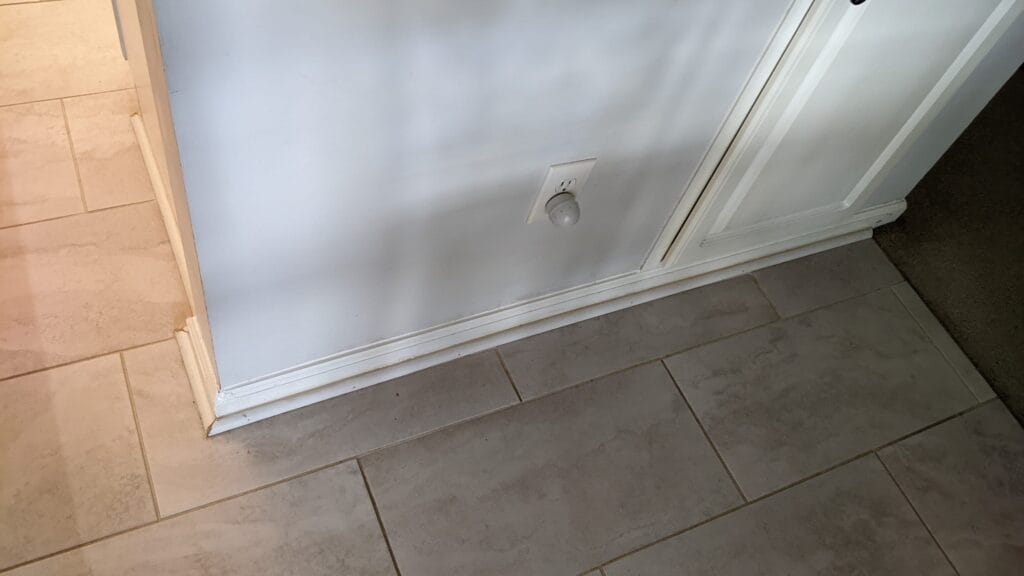
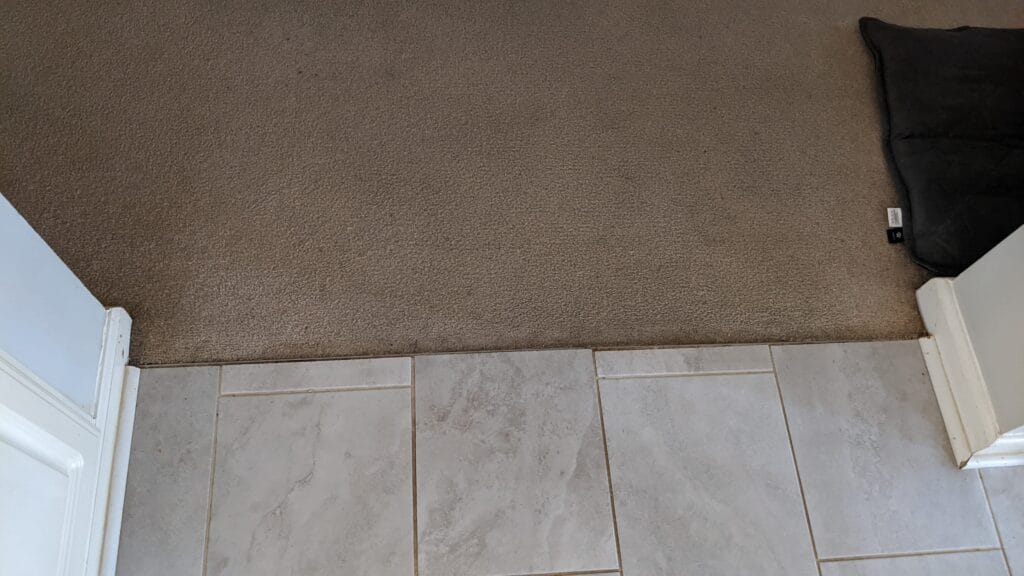
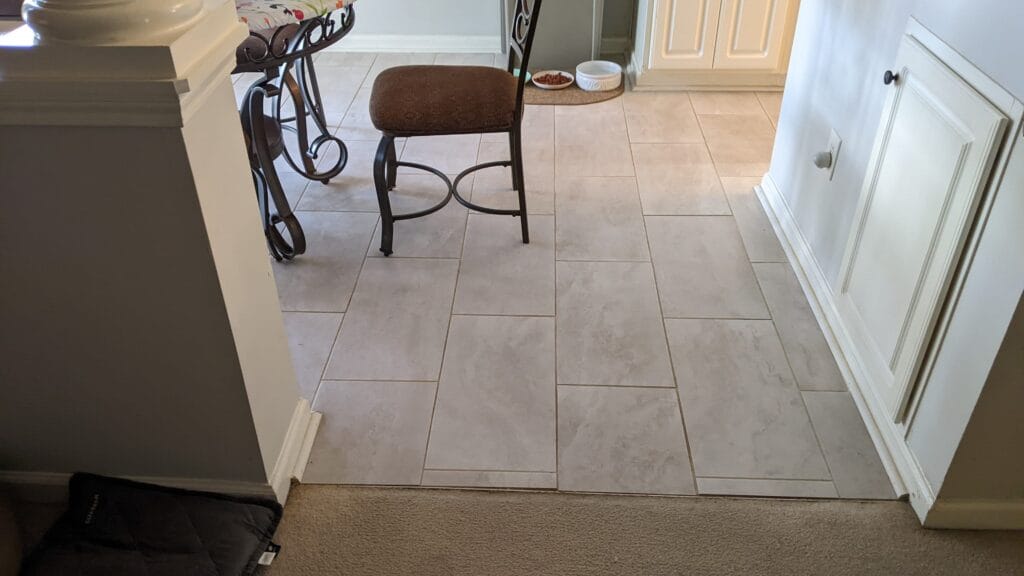
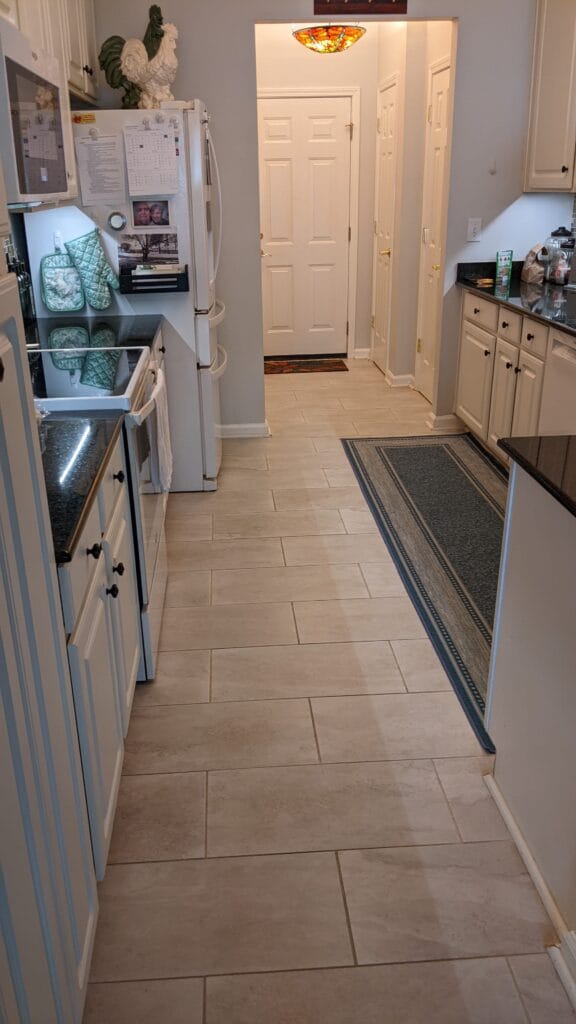
Kitchen Floor Upgrade Project: Progress Phases
Current Project Status
- Current Status. Pending, awaiting final materials to be received. Some were damaged and and need replacement.
Project Events Log
- February 28, 2026: Placed order with Lumber Liquidators. Some key flooring has to be transferred from another state’s store.
- March 5, 2026: Measurement finalized and project paid for.
- March 25, 2026: Received 70% of materials for the job. Some are damaged and will have to be replaced.
Kitchen Floor AFTER: Luxury Waterproof Vinyl
Check back to see the final result!